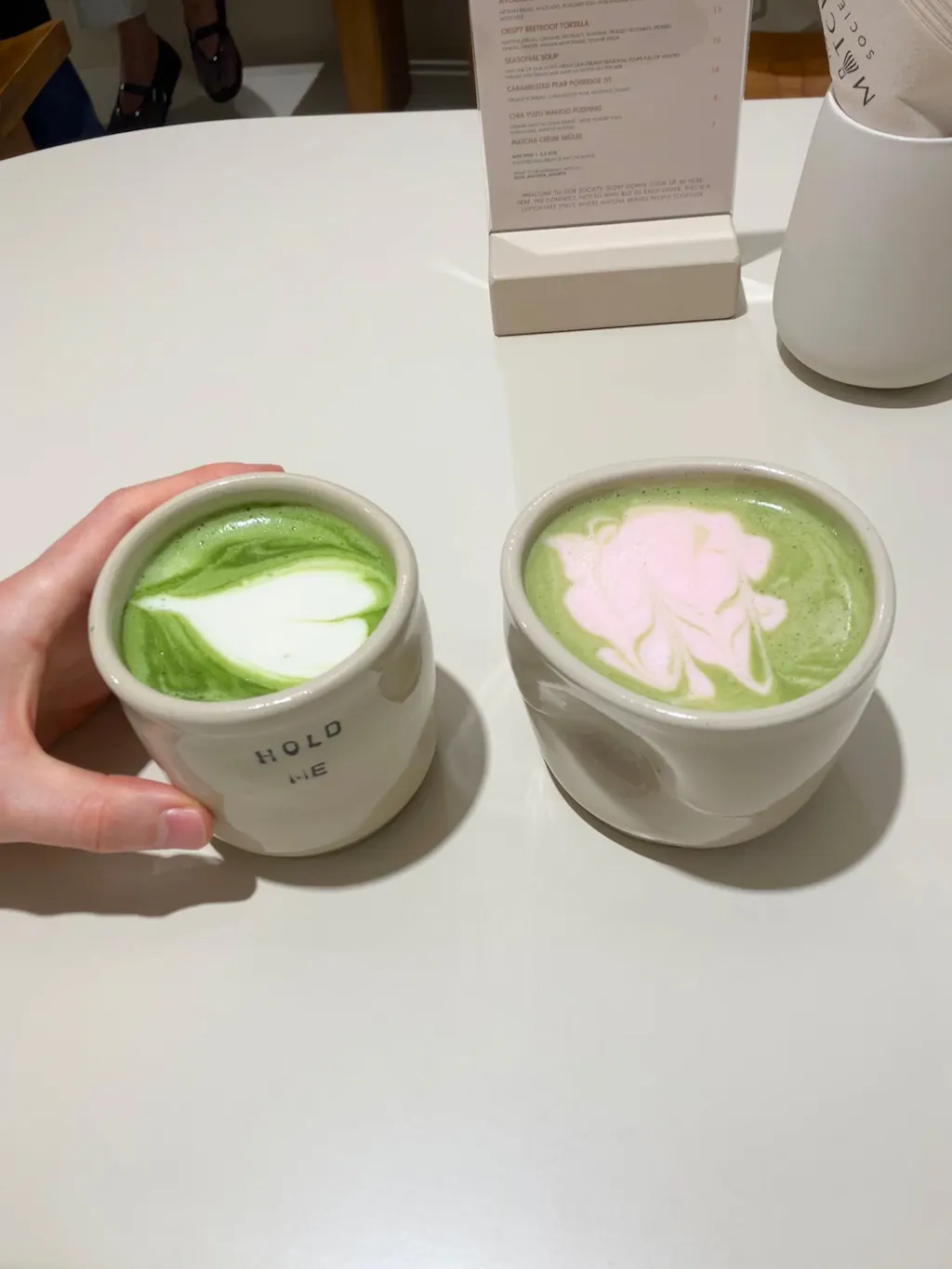
A very interesting combination, but very good!
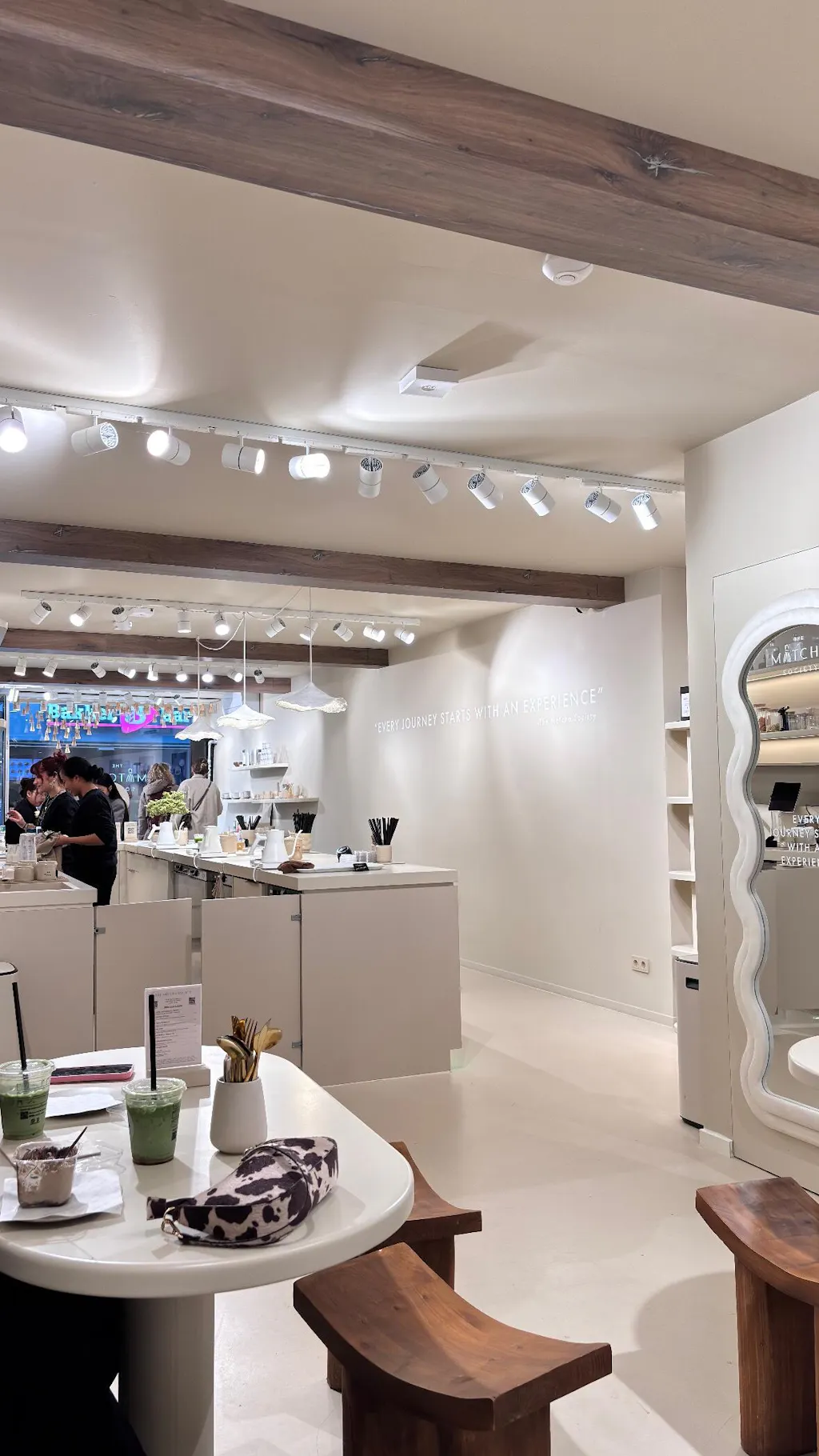
Always good matcha at this place! Can't wait to try the other drinks :D
🚚 Shipping within 3 Business Days
What is Hagi-YAKI (萩焼) ?
Hagi-yaki = Hagi ware is a traditional Japanese pottery made in Hagi City, Yamaguchi Prefecture, with a history of over 400 years. Alongside Kyoto's Raku ware and Saga's Karatsu ware, Hagi ware is well-known as one of Japan's three major tea ceramics. Its simplicity, lack of excessive decoration, and natural warm tones create a striking contrast with the vibrant green of matcha. For this reason, Hagi ware has long been highly valued in the world of tea ceremonies.
Hagi ware is known for its soft texture that highlights the natural feel of the clay, and for the fine crack patterns called “kannyu” (crazing). Kannyu refers to the tiny cracks that form on the surface during firing due to the different shrinkage rates of the coarse clay and glaze. With extended use, tea and sake seep into these cracks, developing an indescribable rustic charm over time. This phenomenon is known as “Hagi no nanabake” (the seven transformations of Hagi) .
You will often see a triangular notch cut into the bottom of Hagi ware, known as the “kiri-kodai.” There are various theories about its origin. One suggests that because Hagi ware was originally produced in official kilns for feudal lords, common people were not permitted to use it. However, by intentionally cutting notches into the foot, the pottery was marked as "imperfect" or "not a legitimate product," allowing it to be sold to the public. While these notches may or may not be present today, as each artist chooses whether to include them, the notched foot design has become a distinctive feature associated with Hagi ware.
He passed away in 2017 at the age of 90, having spent a lifetime creating pottery cherished by tea enthusiasts. Deishi enjoyed an exceptionally long and successful career, leaving behind a remarkable legacy in the world of ceramics.
Eiichi began his journey into the world of ceramics under the guidance of his grandfather, Deishi Shibuya. His work is characterized by a unique expression that does not conform to traditional norms.
He taught himself the art of Hagi ware and developed many original glazes. While many of his pieces are dynamic and powerful, he also creates delicate works. He excels particularly in crafting matcha tea bowls.
Due to the porous nature of Hagi ware, sake or tea residue seeps into the glaze and alters its color over time. As mentioned earlier, this process leads to the phenomenon known as "Nanabake" (the seven transformations). To gradually cultivate the beauty of your vessel, there are a few key points to keep in mind for proper care.
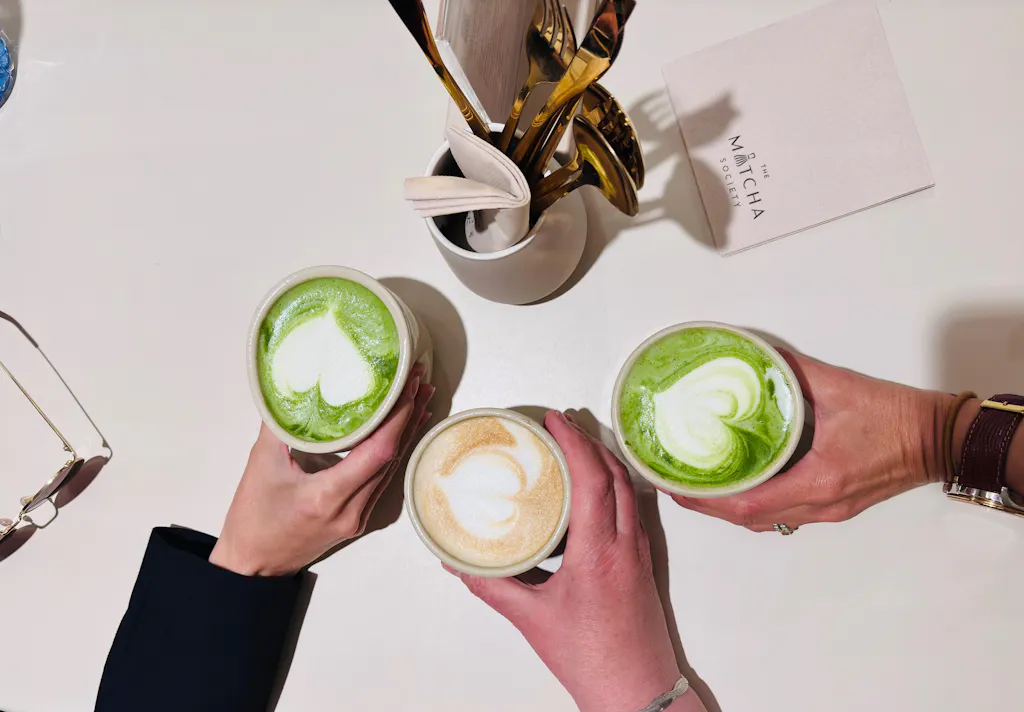
Matcha met kokosmelk. Smaakvol, zoals een matcha hoort te zijn.
A very interesting combination, but very good!
Always good matcha at this place! Can't wait to try the other drinks :D